The Human Edge at Children’s Museums
July 2026
I just read Dr. Dana Suskind’s new book: Human Raised: Nurturing Connection, Curiosity, and Lifelong Learning in the Age of AI. While the book is packed with scientific research and easy to digest frameworks for deciding if and how to use technology, the section titled “The Human Edge” is an important reminder that we do have an edge, and we can nurture it in our young children.

What is the Human Edge?
While recalling information, recognizing patterns, and synthesizing data can now be done by machines, often at a rate and scale that is super-human, AI is not human. The Human Edge is a set of skills and strengths that are uniquely human and allow us to stay in control of technology. Here are some traits and examples of how to help children develop what Dr. Suskind calls the “new hard skills”.
Critical Thinking
AI can provide instant answers, but we need critical thinking skills to be able to question, analyze, and evaluate those answers. To help young children develop critical thinking skills, grown-ups can engage in authentic conversations about daily activities. Asking open-ended questions helps children think through something that is interesting or concerning to them.
Empathy, Emotional Intelligence, and Interpersonal Communication
While AI chatbots might simulate empathy, machines do not have feelings. Understanding nonverbal communication, noticing the nuances in social situations, and offering support when someone is struggling are all human abilities. Providing ample opportunities for children to engage in open-ended play together, talking with children about emotions, and reading books with challenging scenarios all help children thrive in social settings.
Genuine Creativity
Creativity is more than making art. Creativity helps a person come up with unique solutions to challenges, exciting new ideas, and important inventions. While AI can replicate ideas and mimic creative thought, children who are encouraged to be creative will grow into confident adults who innovate, instead of imitate.
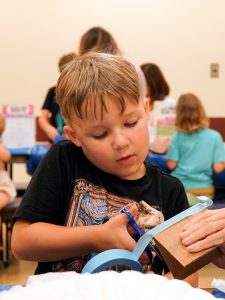
Children are naturally creative so fostering their unique ideas and creations typically only requires free time and some simple items to manipulate. Whether it’s creating unique 3D art pieces out of recycled material, playing with blocks, or making up songs, creativity thrives when we allow young children free time without adult direction.
Moral and Ethical Judgment
As intelligent machines become part of our daily lives, we need to provide ethical oversight. Helping children grow into adults who have the capacity to decide right from wrong and decide what AI should do is an important job for all the grown-ups in children’s lives. Storytelling is great way to help children strengthen their moral and ethical judgment. There are so many wonderful children’s books that can be used to prompt moral and ethical discussions!
Adaptability and Resilience
The world is changing so quickly. Technology is advancing at a rapid pace. The ability to learn, adapt, and thrive when faced with challenges will be even more important in the future. An AI-supported childhood might sound appealing; everything is tailored to that specific child. However, we know adaptability and resilience (also known as grit) develop when children are faced with challenges, especially when they have supportive adults around to encourage them to push through. Whether it’s a block tower that keeps falling over or learning how to ride a bike, facing challenges makes us more resilient.
Children’s Museums
Children’s museums are designed to develop the Human Edge. Children can create art, listen to and tell stories, design and build, and play with new friends all in one place, Kohl Children’s Museum! To see our exhibits and daily programs, click here.
See you at the Museum!
Stephanie Bynum, Vice President of Programs