Chef Zoe's Tips for Raising Food Explorers
November 2026
“How did you get my kid to eat that?” I hear this question often while cleaning up after a Kitchen Creations class at Kohl Children’s Museum. Purple cauliflower and yellow tomatoes are scattered across the room. One grownup recently said, “I put carrots in my son’s lunchbox, and they come right back home. Chef Zoe gives him carrots, and he eats them! What’s up with that?” While there is no magic trick, there are research-backed strategies that can help children feel more comfortable exploring and trying new foods.


Play with Your Food! Chef Zoe makes food fun. Being playful is a great way to make food a fun and positive experience. Some ideas include:
- Create funny faces with fruits or veggies. My dad always claimed he couldn’t cook, but he loved making funny faces on my plate with whatever was served.
- Offer a rainbow of colors. I still remember when my mom brought home purple potatoes. They felt special simply because they looked different.
- Use playful names for food. A child and caregiver at the Museum called cauliflower ghost broccoli, which led to lots of laughs.
- Use cookie cutters to make fun shapes. My mom used cookie cutters to turn simple sandwiches into tea-party lunches. (1)
Involve Kids In The Food Process! Chef Zoe has hands-on food activities that get kids excited. When children help make food decisions, they often feel more invested in trying new foods. Some ideas are:
- At the Grocery Store: Let children pick out a new fruit or vegetable to try. My mom used to let me choose any fruit from on-sale produce. This got me excited about that fruit as a snack option.
- In the Kitchen: Even toddlers can wash or stir ingredients. Before I was school-aged, my grandma had me set the table so I could help prepare for meals.
- Growing Food: Plant a small garden or herbs in pots. I have many fond memories of gathering herbs from the garden while my mom cooked dinner. Mint eventually took over our front yard, which meant we always had plenty for sweet tea.
- Meal Planning: Give age-appropriate choices, “Would you like carrots or green beans with dinner?” As I got older in elementary school, my mom would task me with planning one meal each week. (1)
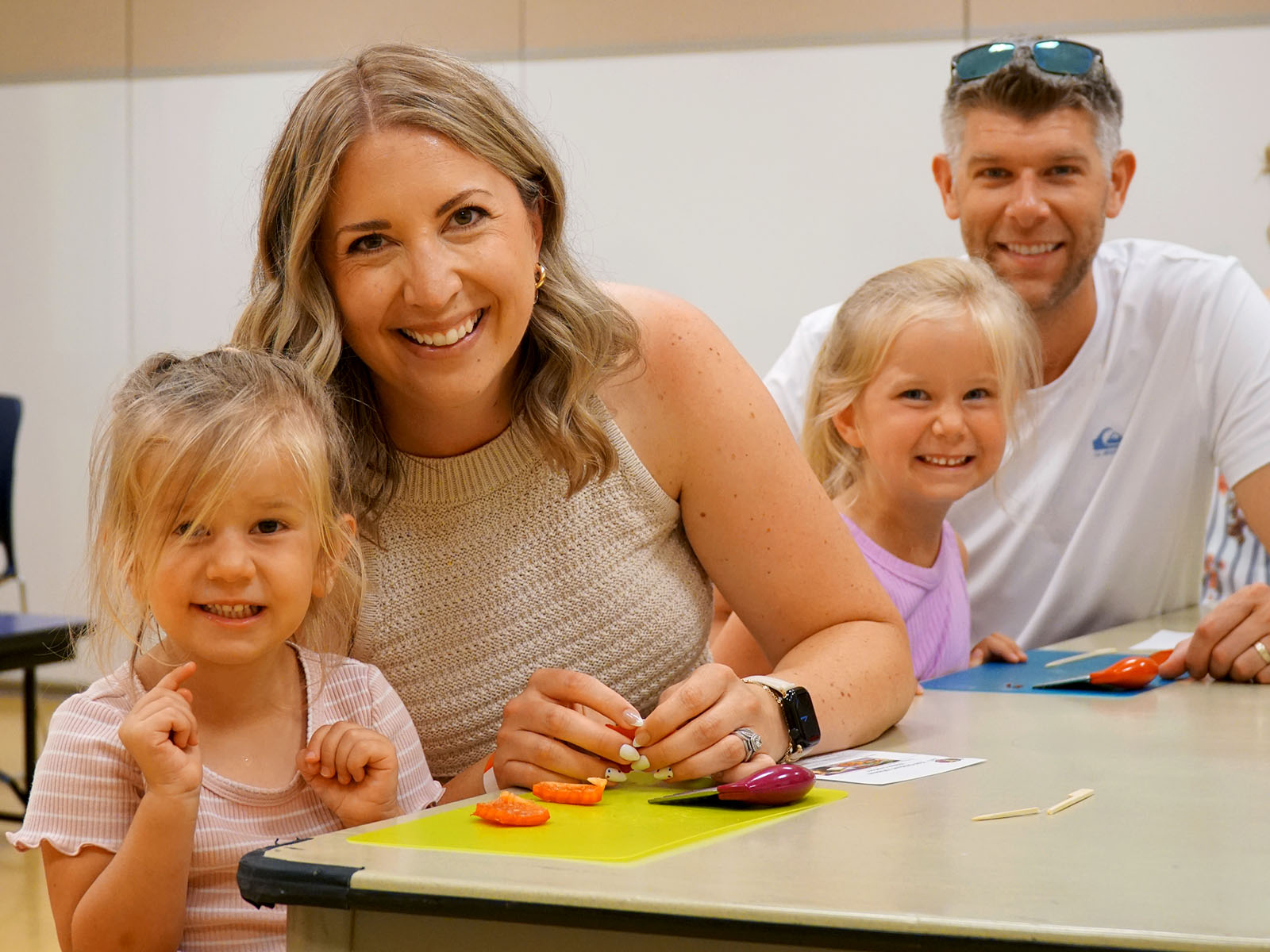
Model Healthy Eating Behaviors! In Kitchen Creations, I model healthy eating habits and food curiosity. You can do the same at home:
- Offer New Foods Many Times. Research shows children may need to try a new food 12-15 times before accepting it. (2) A “try” can be a sniff, a lick, a touch or even a tiny taste! As an adult, I started revisiting foods I disliked as a child. After trying them prepared in different ways, I eventually learned to enjoy many of them.
- Eat With Your Child. If you eat and enjoy nutritious food with your child, then your child is more likely to be curious and willing to try them. Try not to run a “short-order cook” kitchen where everyone gets a different meal. (3) My younger brother was a very selective eater, and my mom spent years preparing separate meals to accommodate him.
- Serve New Foods with Familiar Favorites. Have at least one food you know your child will eat at each meal. This helps anxiety and ensures kids do not go hungry while still providing opportunities to try new things. This tip would have saved my mom from years of struggling with my younger brother.
- Build Food Bridges. If a child likes a specific food, think about similar foods they might accept. Like chicken nuggets? Try fish sticks or baked chicken strips! This was one strategy that worked well for my family.
Another research-based approach comes from the Ellyn Satter Institute and is supported by the American Academy of Pediatrics. The approach is based on the idea that adults and children each have their own jobs at mealtime. Adults decide what, when, and where food is served. Children decide whether to eat and how much to eat. When everyone focuses on their own role, mealtimes can feel less stressful. Children learn to listen to their hunger and fullness cues, while adults can spend less energy negotiating bites and more time enjoying meals together. (4)
Whether your child is an adventurous eater or cautious about trying new foods, these research-backed strategies can help make mealtimes more positive and enjoyable. Chef Zoe will be back with Kitchen Creations in late spring 2027. In the meantime, stop by Bean Sprouts Café for inspiration and keep exploring food together at home
See you at the Museum!
Zoe A. Tyler
Education Specialist II
Works Cited
1. Anderson, Andre. “How to Manage Picky Eating Children and Healthy Nutrition 2026.” Just 4 Kids Health, 28 May 2026, just4kidshealth.com/how-to-manage-picky-eating-children/.
2. Karagiannaki, Klelia, et al. “Optimising Repeated Exposure: Determining Optimal Stimulus Shape for Introducing a Novel Vegetable among Children.” Foods (Basel, Switzerland), U.S. National Library of Medicine, 21 Apr. 2021, pmc.ncbi.nlm.nih.gov/articles/PMC8143140/.
3. McCarthy MD, Claire. “Study Gives Insight – and Advice – on Picky Eating in Children.” Study Gives Insight — and Advice — on Picky Eating in Children, Harvard Health Publishing Harvard Medical School, 23 June 2020, www.health.harvard.edu/blog/study-gives-insight-and-advice-on-picky-eating-in-children-2020060920004.
4. Satter, Ellyn. “Division of Responsibility.” The Satter Division Of Responsibility In Feeding , Ellyn Satter Institute, <span”>www.ellynsatterinstitute.org/how-to-feed/division-of-responsibility/. Accessed 16 Sept. 2026.