Tales that Take Root
October 2026
“Once upon a time…” Those four words alone work magic. They spark imagination and begin a journey to different times and places, exciting landscapes and new adventures. Truly the foundation of whatever story you can conjure. And, within that conjuring, there is usually a pretty solid message.
We all know the value of story time as a tool to help with literacy and language development, but we often forget the deeper roots of storytelling. Whether it was a group listening to a spooky story around a fire or a traveling artisan going from village to village sharing the local folktales, storytelling has a long tradition of being a tool to help most cultures instill their core values and build positive character traits in their youngest community members. Even today, many of us know a story that is a family favorite or a common fairy tale told at family celebrations.
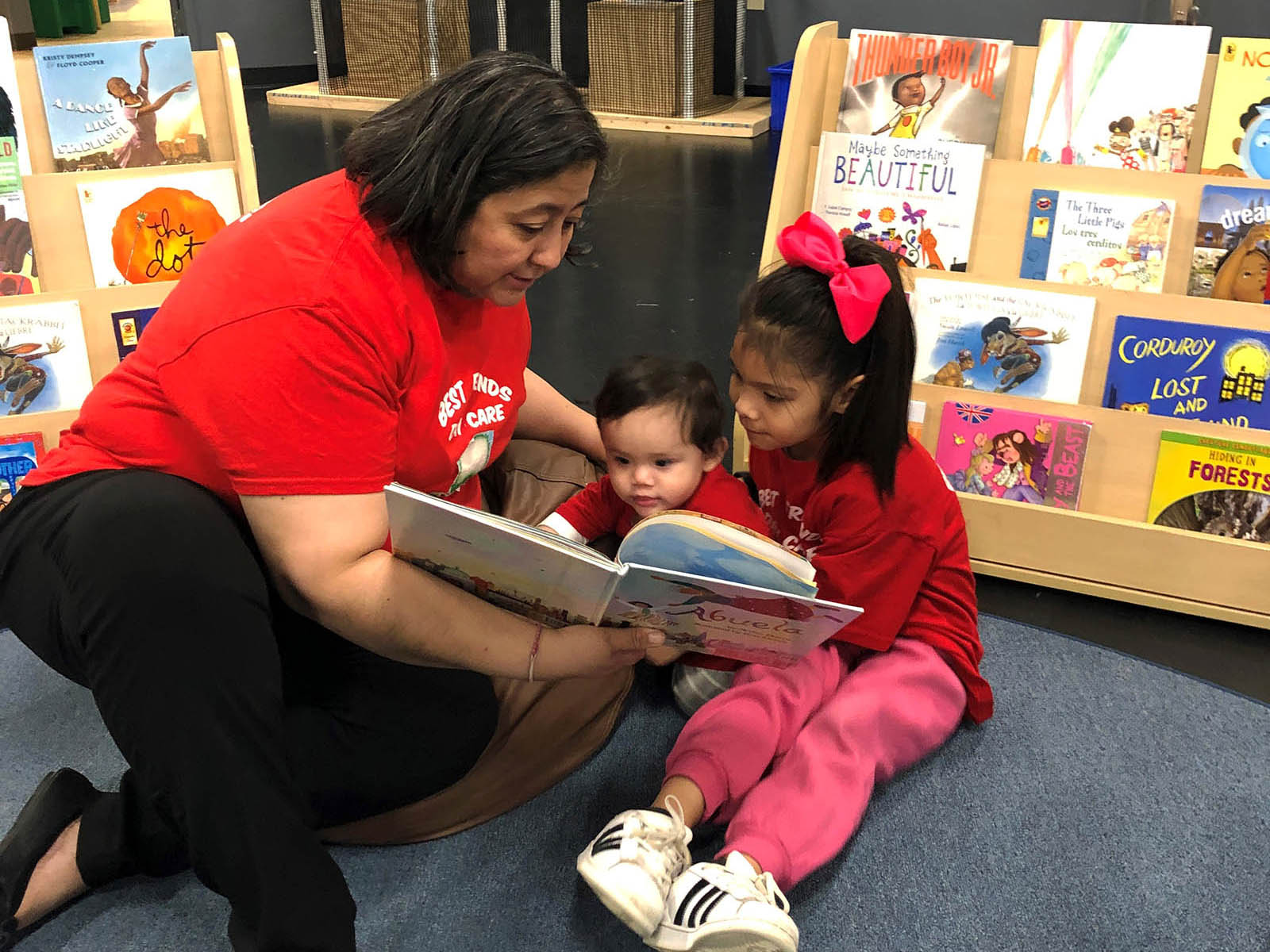
Unfortunately, with today’s modern conveniences, story time can get relegated to the nearest screen.* That shortcut is so tempting! I am not judging. Honestly, I’ve used it myself, and it can also lead to a few moments of quiet bliss. But it also loses some of the flair and, often times, a large portion of the message. Storytelling covers all of the bases and creates a powerful interaction between the storyteller and the audience. It can also leave a lasting impression along with an important lesson about character development.
Here are some of the ways storytelling can help build positive character traits:
Personal Engagement and Connection
When we choose a story, we immediately have some “buy in”. Whether it is a new favorite or one our parents used to tell us, the act of choosing to tell the story creates a personal investment. That connection carries through to whoever is listening. We laugh at the jokes, we share the sadness, we feel joy, and we learn the lessons together.
Building Empathy
Every time we tell a story, we create a safe space for the listeners. They can see and hear the challenges facing our characters and engage with them in a way that is emotionally charged, but the listener is safe and sound. This is very important to driving messages about honesty, bravery, gratitude, and respect home. In addition to being taught about
character traits, we can “catch” character when we see or hear about someone displaying character strengths.* The lesson stays with the listener long after story time is over.
The Building Blocks of Character
The lessons in the story we choose are inherently valuable to the storyteller. That’s why we chose it, right? These are the messages we want to tell. It can be a lesson about teamwork and gratitude, or bravery and adaptability. The combinations are endless but are all valuable and impactful to the little ears that are joining us on the journey.
You can read a favorite story book, act out a family classic, or simply tell a story about your day in a dramatic and fun way. Any time we tell a story we help build verbal skills and confidence. Every story has a positive impact.
This month, Kohl Children’s Museum is opening our brand-new exhibit, The Roots Of Kindness. I invite you all to join us as we explore how Gratitude and Respect impact our lives. You may also see me or some of my storyteller friends adding to the experience with some classic folktales exploring those same themes.
So…Let’s tell a story! “Once Upon a Time” (now you go. )
See you at the Museum!
Vito Gioia, Director of Play
Author Bio
Vito P Gioia, Jr has been performing folktales and stories for the past thirty years. He is thrilled to be sharing his joy of storytelling as the Director of Play at Kohl Children’s Museum of Greater Chicago.

References
https://www.edweek.org/teaching-learning/fewer-parents-are-reading-aloud-to-their-kids-why-that-matters/2025/06
https://www.gcu.edu/blog/teaching-school-administration/what-character-education