Lovely Loose Parts
September 2026
Kohl Children’s Museum loves loose parts! In fact, we think loose parts are lovely!
Why do we love loose parts?
Loose parts play is a powerful way to support children’s learning. A simple collection of open-ended materials invites children to create, build, sort, design, imagine, and explore in many different ways. Because loose parts do not have one fixed purpose, children can decide how to use them. A cardboard tube might become a telescope, a magic wand, a tunnel, or part of a larger construction. Natural and recycled materials—such as pinecones, bottle caps, fabric scraps, and cardboard pieces—can become whatever a child imagines. Loose parts play:
- Encourages creativity and imagination
- Supports problem-solving and critical thinking
- Builds language, collaboration, and communication skills
- Allows children to work at their own developmental level
- Promotes child-centered exploration with no single “right” answer
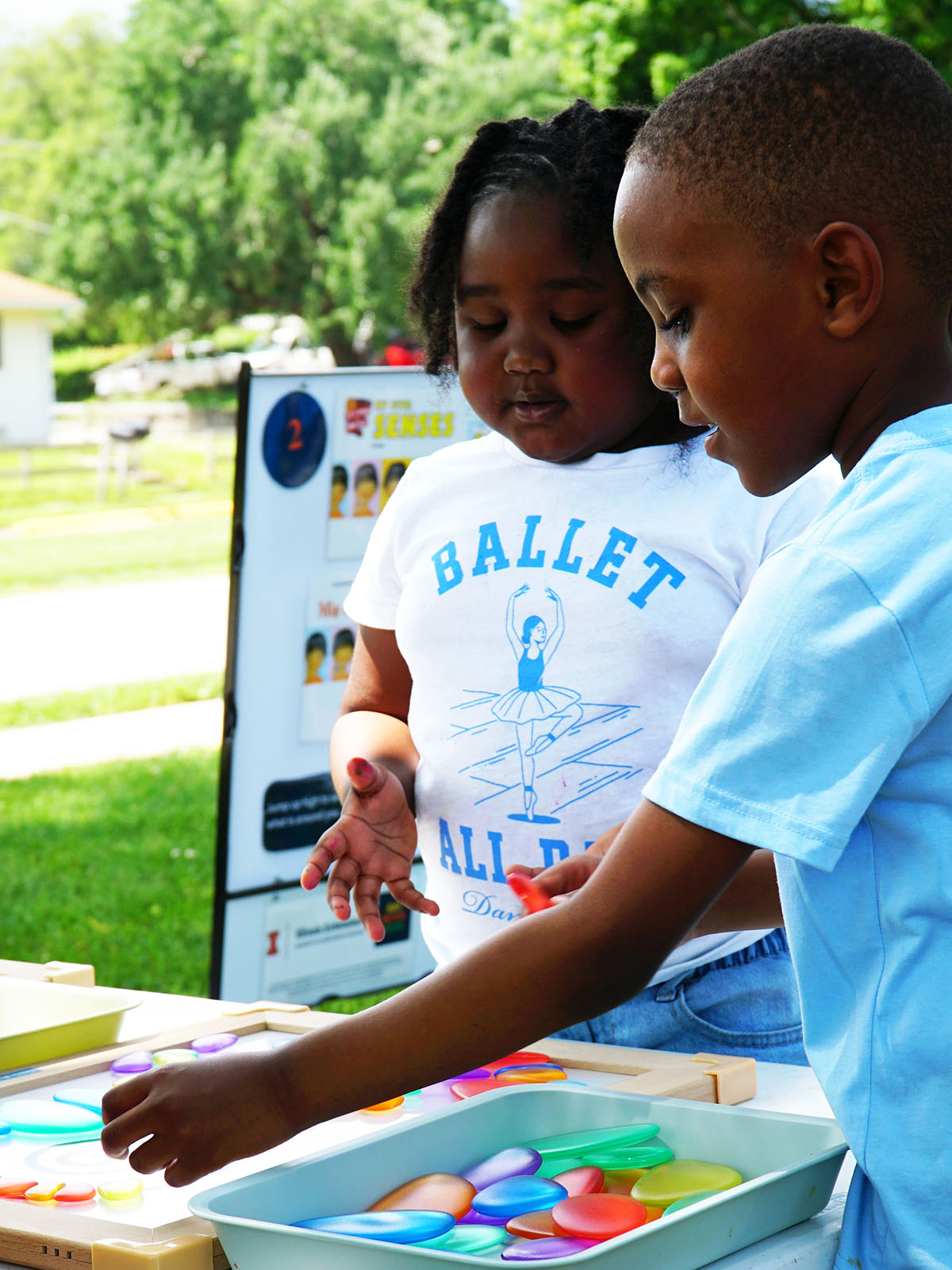
So, what exactly are loose parts?
Loose parts are simple, open-ended materials that children can pick up, move, carry, combine, redesign, line up, take apart, and put back together in all kinds of ways. They might be natural or man-made, recycled or new, familiar or surprising.
What makes loose parts so lovely is that children get to decide what they become. Instead of following one set of instructions, children can use the same material in many different ways depending on their ideas, interests, and stage of development.
- A stone can become treasure, a building piece, or part of a pretend meal.
- A cardboard tube can become a telescope, a tunnel, or a piece of a larger invention.
- A fabric scrap can become a blanket, a cape, a roof, or a storytelling prop.
Why does loose parts play matter?
The idea of loose parts play was introduced by architect Simon Nicholson in 1971. He believed that the more open-ended materials children have access to, the more opportunities they have to create, experiment, and invent.
Loose parts matter because they invite children to take the lead. There is no single “right” way to use them, so children are free to test ideas, solve problems, collaborate with others, and return to materials again and again with new plans.
- They encourage children to think creatively and flexibly.
- They support persistence as children build, adjust, and try again.
- They strengthen communication as children explain ideas and negotiate roles.
- They give parents and caregivers meaningful ways to observe problem-solving, imagination, and growth.
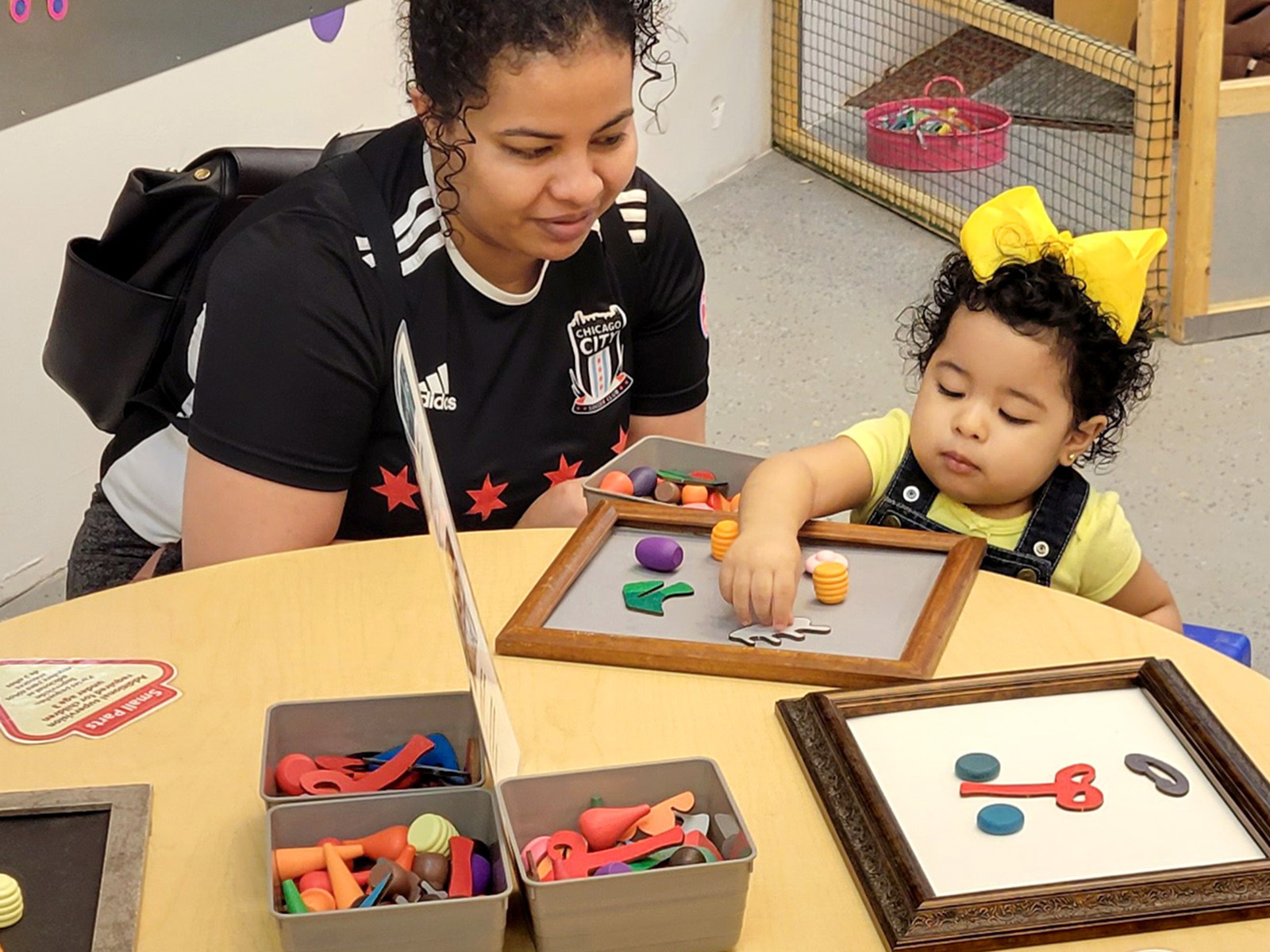
What are examples of loose parts?
Loose parts materials may be natural or synthetic, and they are often free, recycled, repurposed, and inexpensive (another reason to love them)!
Outside environments: Natural materials
- Flowers, leaves, grasses, straw, moss, herbs and plants
- Sticks, branches, driftwood, bark and pine needles
- Pinecones, seeds, shells and feathers
- Boulders, rocks, pebbles and stones
Indoor environments: Man-made materials
- Blocks, building materials, baskets, bowls and manipulatives
- Measuring and pouring tools, such as cups, spoons, buckets and funnels
- Fabric remnants, scarves, ribbon, string, floor samples and small rugs
- Recycled items, such as paper, tubes, ribbons, caps, cans, lids, keys, curtain rings, napkin rings, wood scraps, sponges, foam and cardboard
- Art materials, such as buttons, spools, tape, popsicle sticks, beads, straws, cotton balls, paints and brushes
How do you start loose parts play at home?
Start small by introducing a few materials in a clearly organized space. Observe how children use them and gradually add more variety as they become confident.
What are some safety concerns when using loose parts?
Adult supervision and preparation are the best safety precautions. Ensure that loose parts and materials are safe, non-toxic, and developmentally appropriate. Keep age, ability, and skill in mind. Be aware of choking risks for infants, young children, and children with unique developmental needs. Loose parts should be large enough to prevent choking hazards.
Now let loose and have some fun! Discover for yourself how lovely loose parts are!
See you at the Museum!
Manjoo Stoeterau, Education Assistant Manager
References
Nicholson, S. (1971). How NOT to Cheat Children: The Theory of Loose Parts. Landscape Architecture, 62(1), 30–34. Retrieved from https://www.jstor.org/ stable/44663886 Stacey, S. (2019). Inquiry-Based Early Learning