Early Childhood Connections
Kohl Children’s Museum of Greater Chicago has provided training on the Project Approach to over 500 early childhood teachers and childcare professionals working in under-resourced communities in the Chicagoland area since 2000.
 Early Childhood Connections is grounded in the Museum’s belief that children learn best when they are engaged, motivated, intrinsically curious and most of all, having fun.
Utilizing the Project Approach, children are encouraged to formulate questions, seek out and discover answers, consider their findings and form conclusions.
In this environment, teachers are empowered to become the facilitators of learning rather than distributors of knowledge. It also inspires all children to explore and learn in their own way while fostering the development of critical thinking, cooperation, and communication skills.
Goals
- To increase the use of the Project Approach and developmentally appropriate practices in classrooms and childcare settings serving children at risk of academic failure ages 3-8
- To increase the positive attitudes of teachers and childcare providers toward Project Approach learning
- To provide parents with opportunities to play an active role in their children’s education
Components
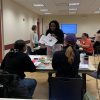
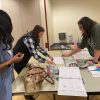
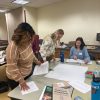
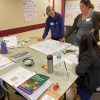
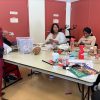
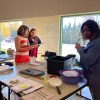
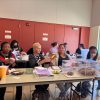
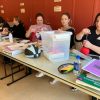
 The training component consists of three full professional development workshop days conducted in the fall, winter and spring of each school year.
Each participating teacher conducts one or more projects in their classrooms and childcare settings during the year of training and has opportunities to share their successes and challenges with their peers.
- Professional development for teachers and childcare providers conducted by trainers certified by Dr. Judy Harris Helm, world-renowned expert in the Project Approach
- Focused Field Trips to the Museum
- Resources and support in the Project Approach
- Parent/child in-school activities
- Family celebrations
- Family passes for future Museum visits
Contact
For more information or questions, please email our Education Team or call (847) 832-6873.
Programs
Early Childhood Connections: School Districts
Applications for the 2026-27 school year are closed.
Early Childhood Connections: Childcare
Applications for the 2026-27 school year are closed.
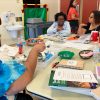
Measuring Success
Throughout the past eight years, the Museum has been assessing the program using both quantitative and qualitative methods. Through collaboration with Dr. Jan Perney from National-Louis University, we have concluded that through the rigorous standard of a pre- and post-test control group design, and controlling for initial differences between the intervention and control groups, there is evidence that the Early Childhood Connections Program is producing statistically significant and practically meaningful positive changes in teacher and childcare providers’ attitudes toward the project approach and an increase in the use of developmentally appropriate methods and strategies by early childhood educators.
It is our hope that more than 75 sample projects in this book will motivate early childhood professionals to begin to implement this approach into the everyday lives of their classrooms, centers or homes.
Early Childhood Connections was generously funded by:
Anonymous, Bowman Lingle Foundation, CME Group Foundation, Discover Financial Services, Gorter Family Foundation, and Max Goldenberg Foundation